Why the Hebrews Made the Ark
One of the first things the Hebrews did upon reaching Mt Sinai was to build the Ark of the Covenant. Have you ever wondered why God instructed them to make it? As significant of an event as making it had been, we are left in the dark about why it was required of them. The Bible does not seem to offer up a clue why that had been done. The Hebrews had never built such a thing and no indication is given that they had ever even seen one. They certainly had nothing else remotely like it as part of their culture. It appeared to be completely new.
Never-the-less, when God had commanded them to begin, they immediately understood exactly how it was to be done. Not only that, but from the moment it was built, it became the very center of their entire religion and culture. It happened very suddenly and the effect was long lasting. No other thing from the physical world was as important to them from the day they built it.
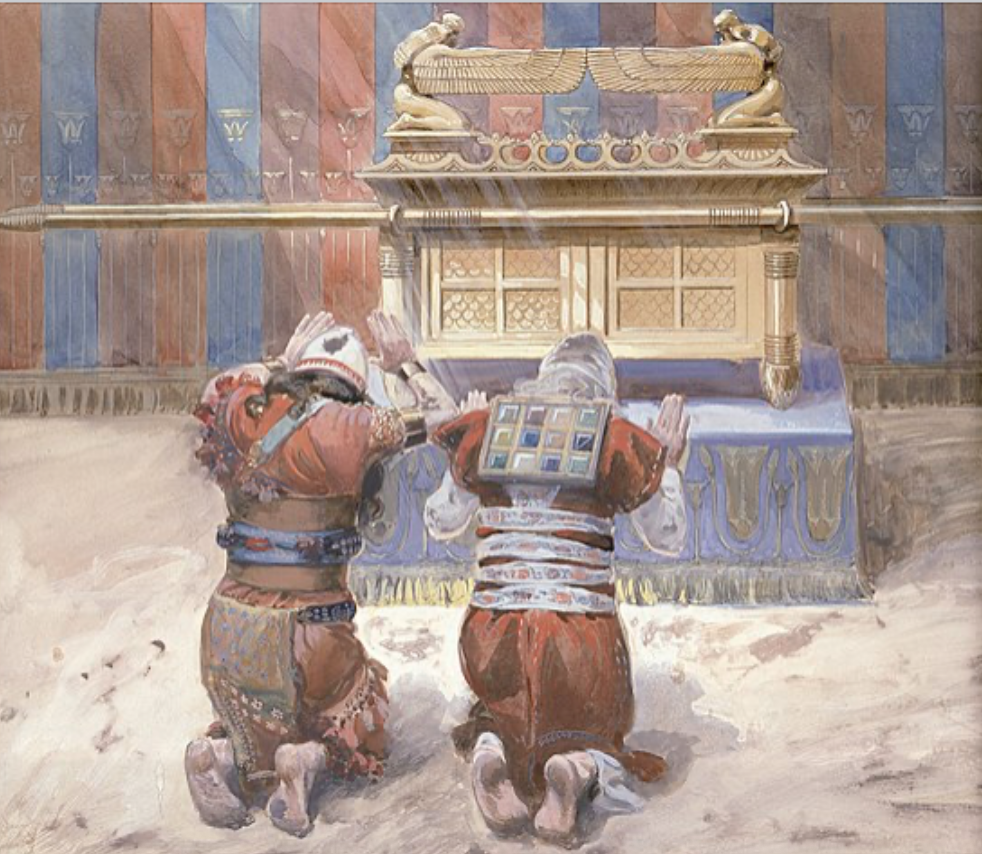
Think about that. As significant as it immediately became, there was nothing else like it for their entire history, earlier or later. It was entirely unique to them. Yet, it was really only a box! God was going to sit on top of a nearly empty box. At the same time, the impact it had on their entire culture and religion went far beyond any other material artifact that they had in their possession. The more you think about it the stranger it becomes.
In its simplest form the Ark was only a box, a storage container, if you will. It was not an ordinary box (not one of the double wall corrugated variety). It was a special box covered with gold (better even than duct tape). The Ark had rings at the four corners through which two long poles were inserted and it was carried by four bearers, one at each end of the poles. The top, the lid, was to be the throne of God (the mercy seat) and was complete with wings of Cherubim (angels). It was the throne of God. For sure, it didn’t look like a good candidate for a throne. It really wasn’t even a good place to sit. This was a really strange box. Why had God not only commanded them to make it, but He told them specifically to make it in such a strange way.
Yet it was only a box. Strange for a throne. God sat on top of a nearly empty box. Where did that ever originate? This box was totally unlike anything the Hebrews had constructed up to that point. Wherever did they get such an idea? Don’t scratch your head too much over that. It’s liable to stir up dandruff.
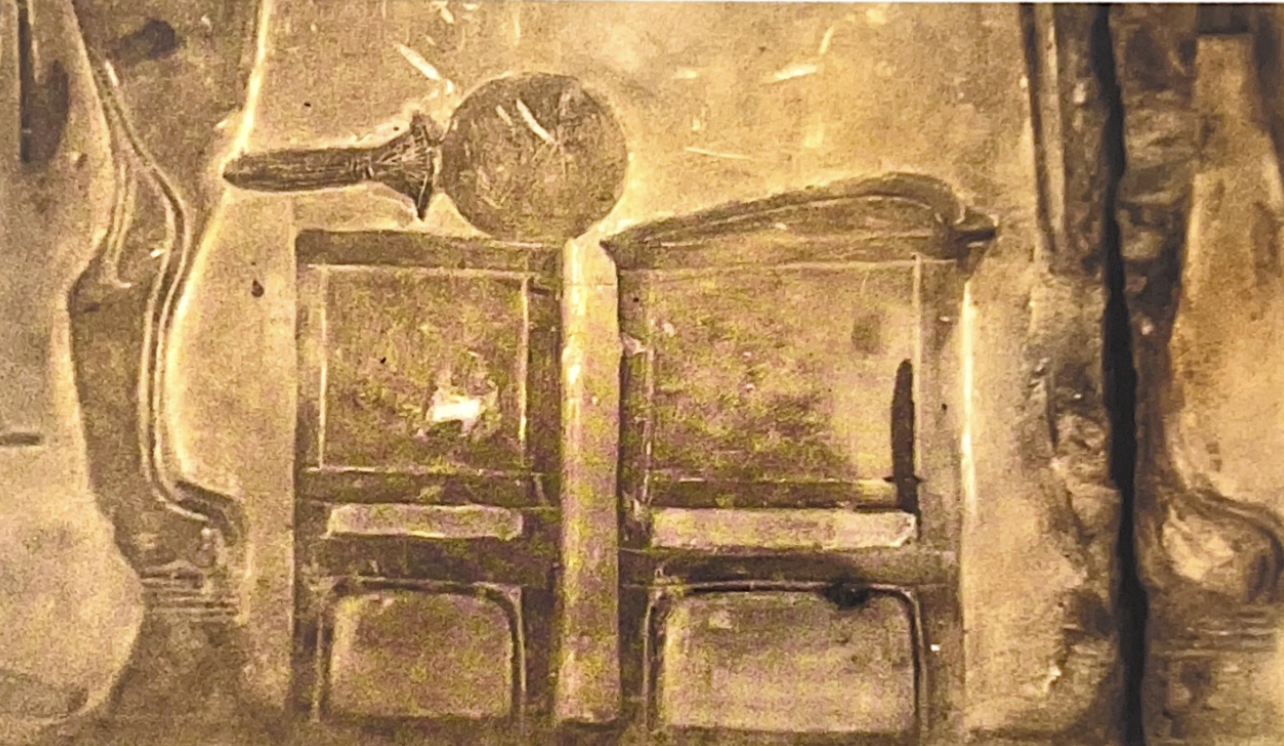
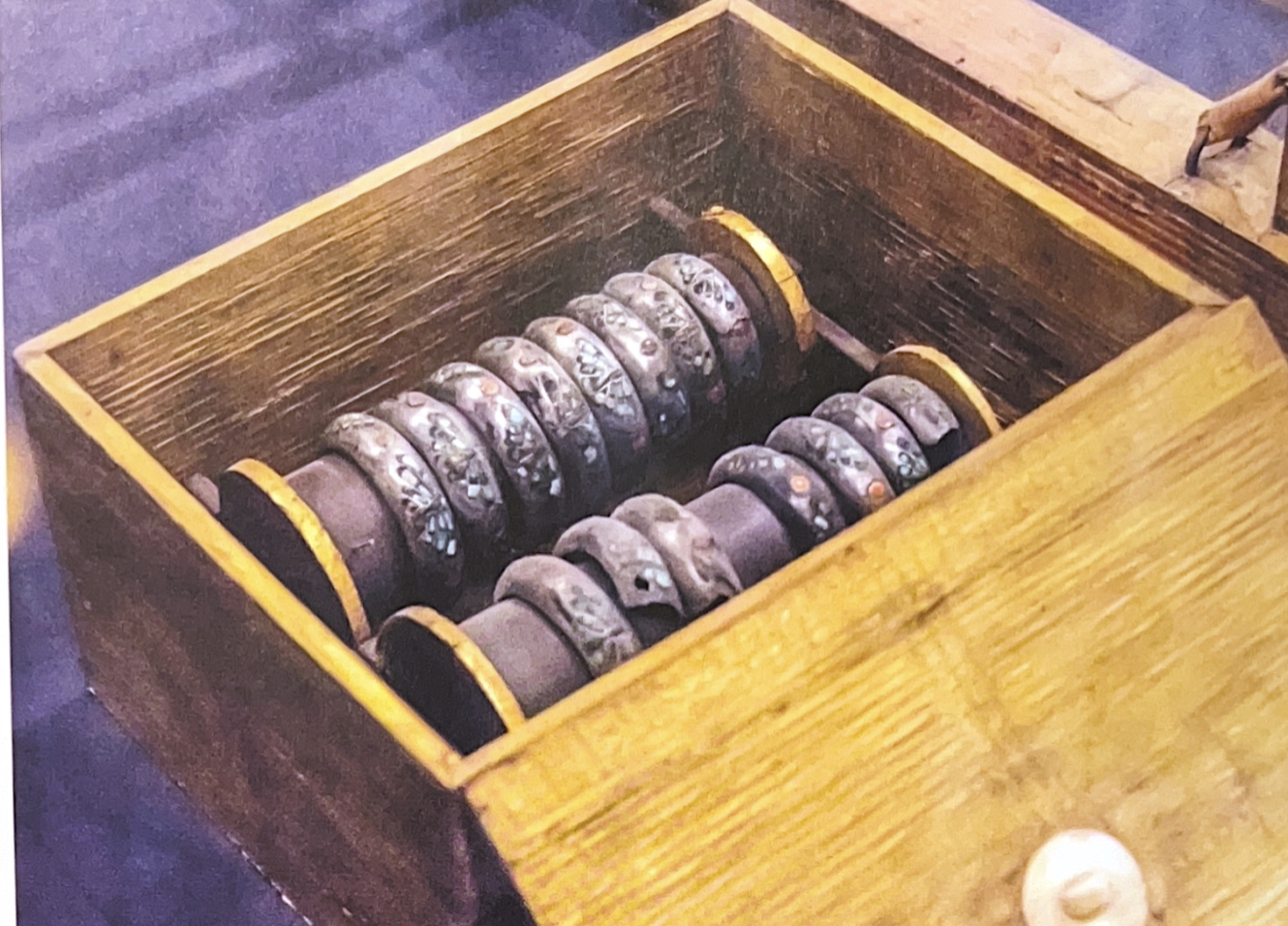
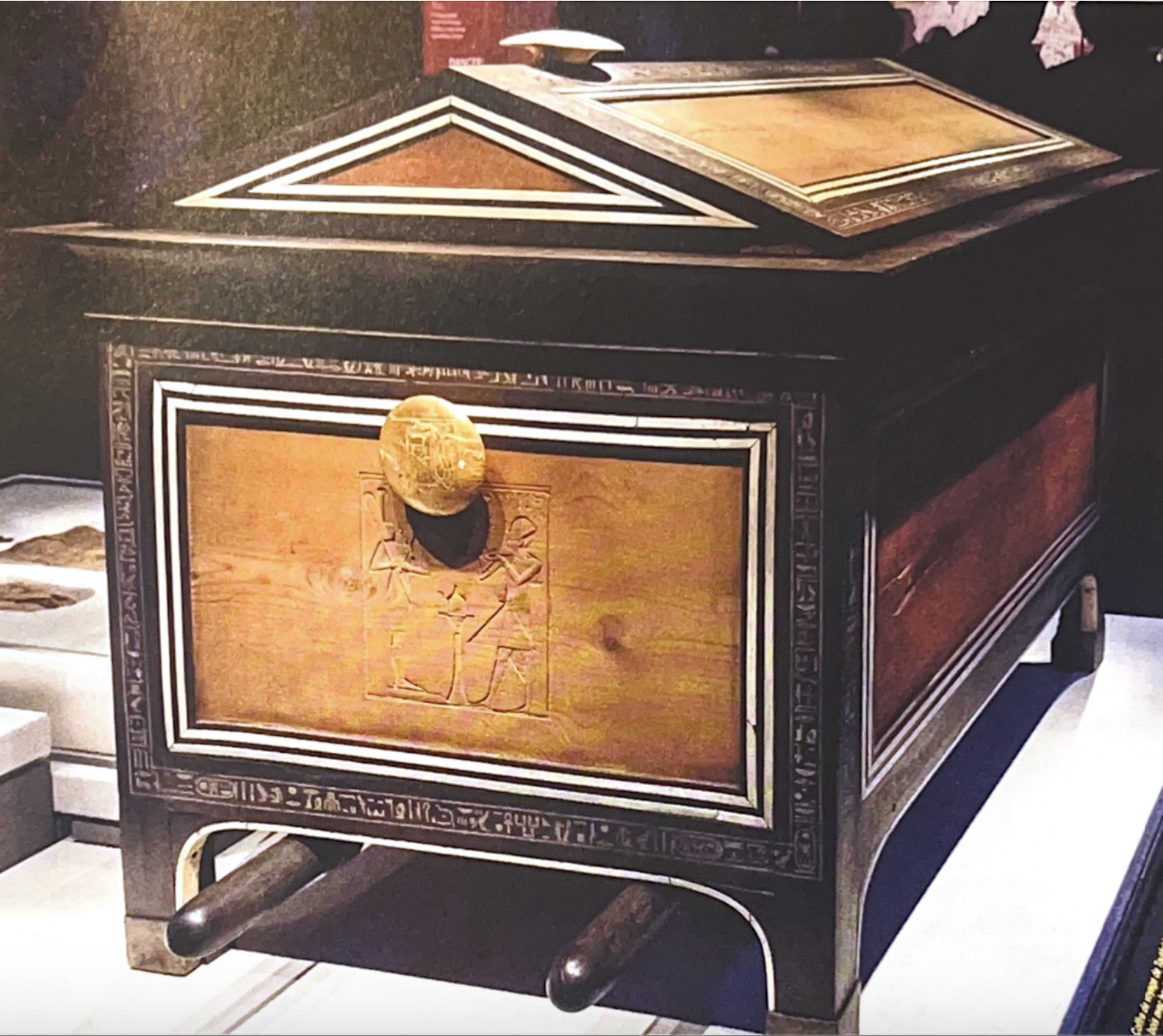
At the same time, the Egyptians seemed to be preoccupied with boxes. They built many boxes for many different purposes. God would take advantage of the various ways they used them. He would compare boxes to show how He is a far better God to worship than a pharaoh, especially a dead one. All Egyptian boxes were very important and nearly always the importance lay at the spiritual level. The box at the right shows the Egyptians carrying their box in the identical way the Hebrews carried their own.
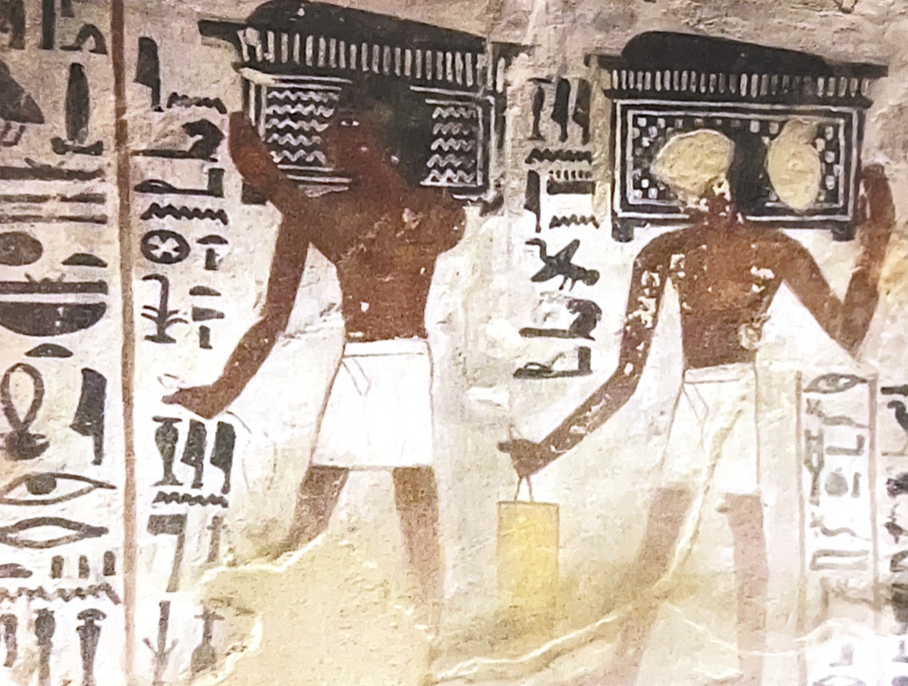
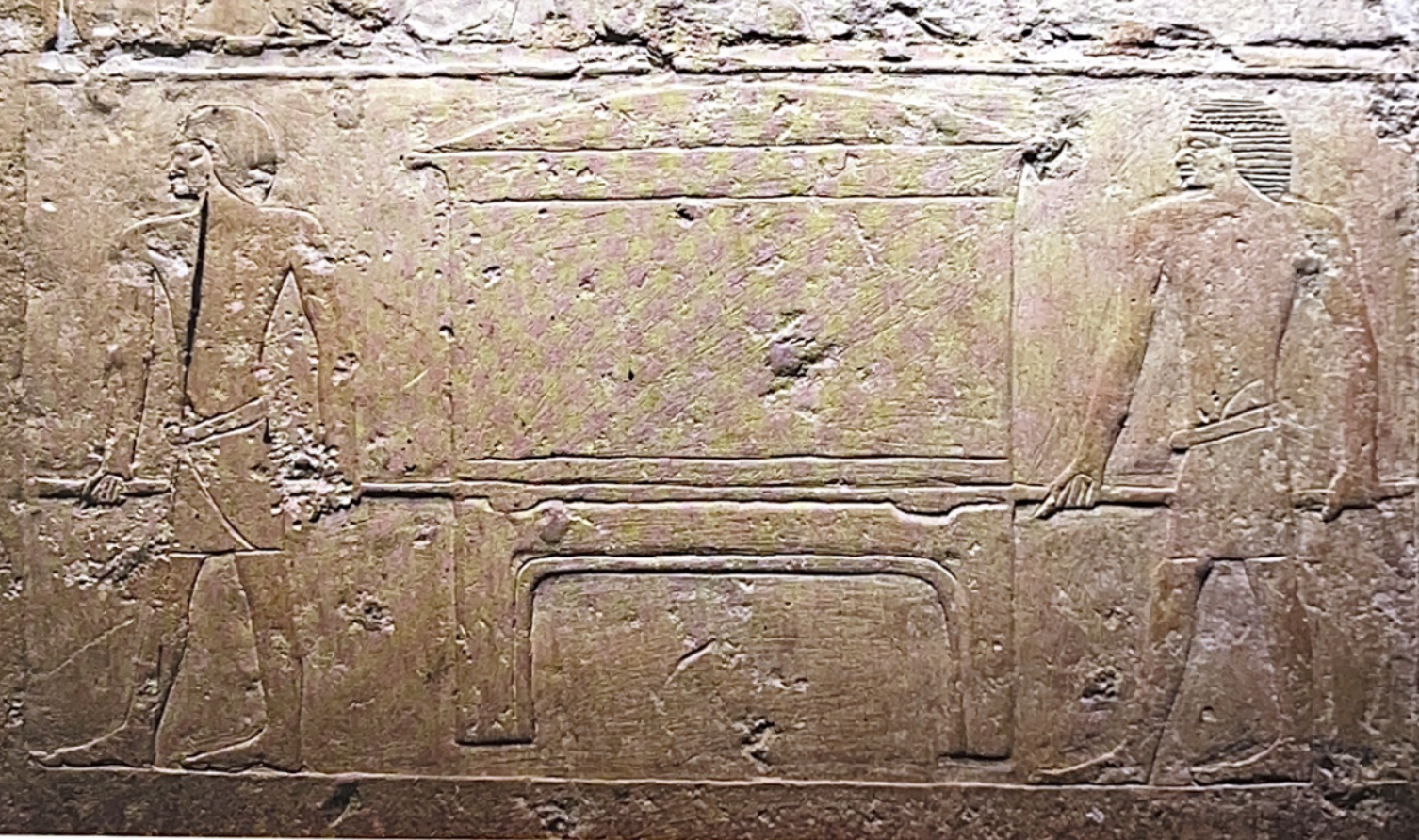
They were not just preoccupied with making boxes, they were also very concerned about the hereafter. A great deal of their national resources were directed toward what would happen to pharaoh, a god of Egypt, upon his death.
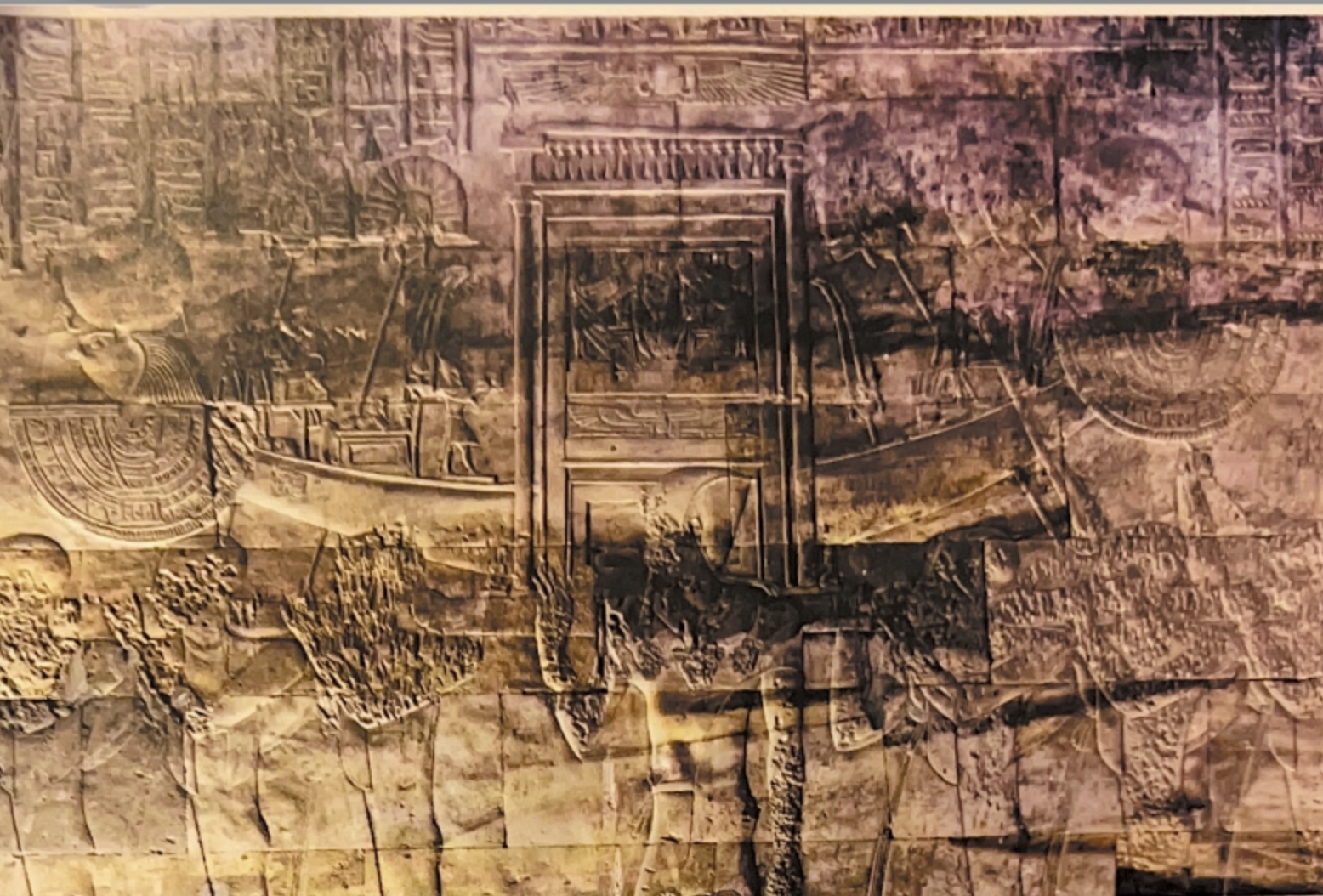
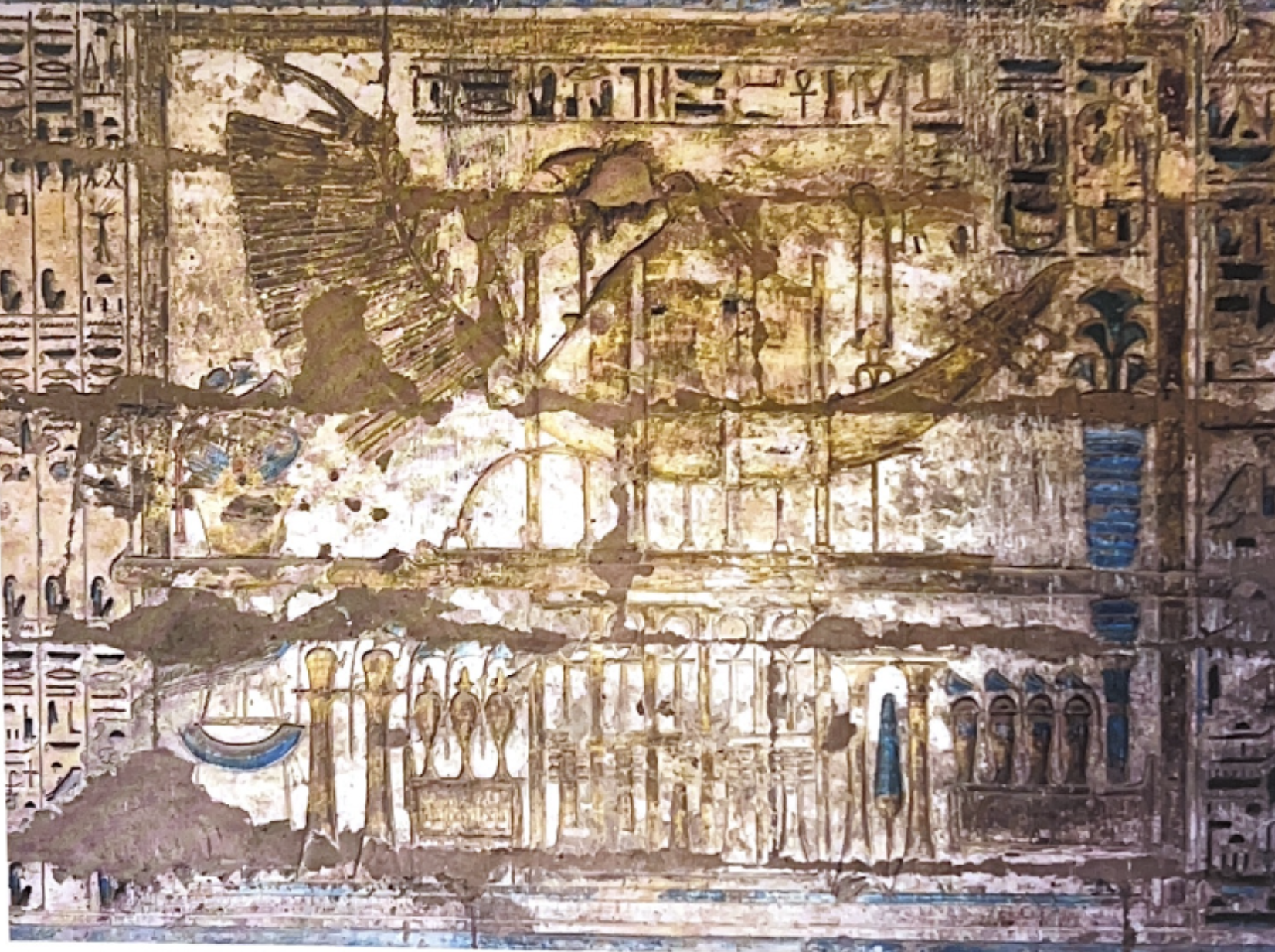
The barque, also commonly known as a sky boat, even though a sky boat didn’t look like a typical box was one of their most important containers. Pharaoh, supposedly inside, would ride the barque to his permanent place in heaven (his destination spiritually). Even though he was expected to spend eternity in the cosmos, there would still be an earthly tomb for him (his physical destination). It appears that Egypt recognized both the physical and spiritual worlds, just as the Hebrews did, and they attempted to deal with both.
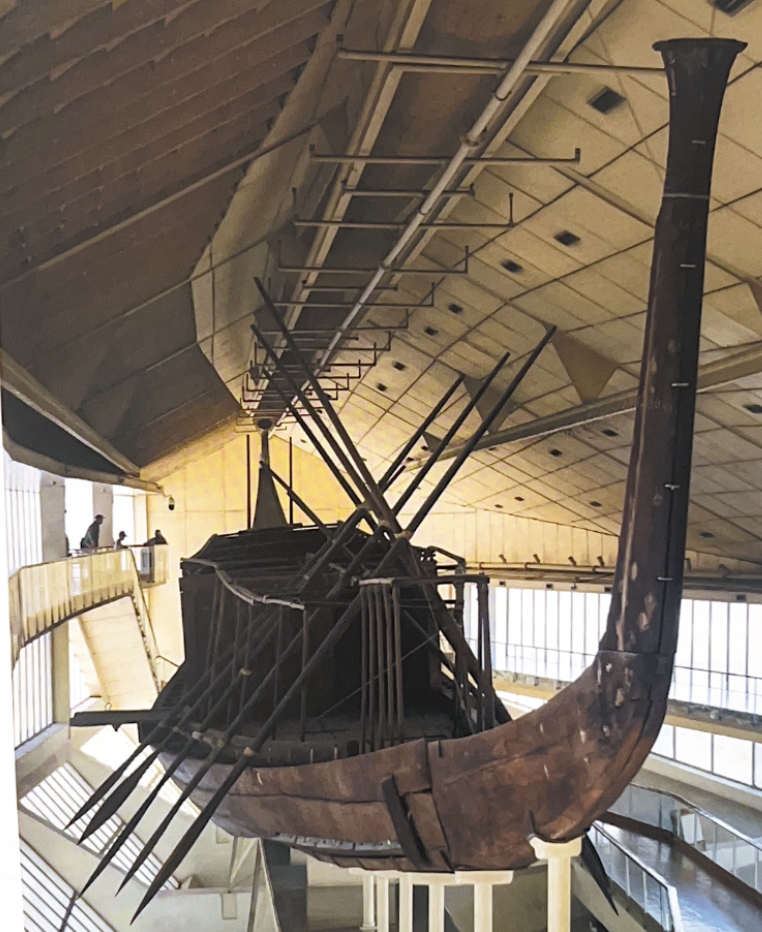
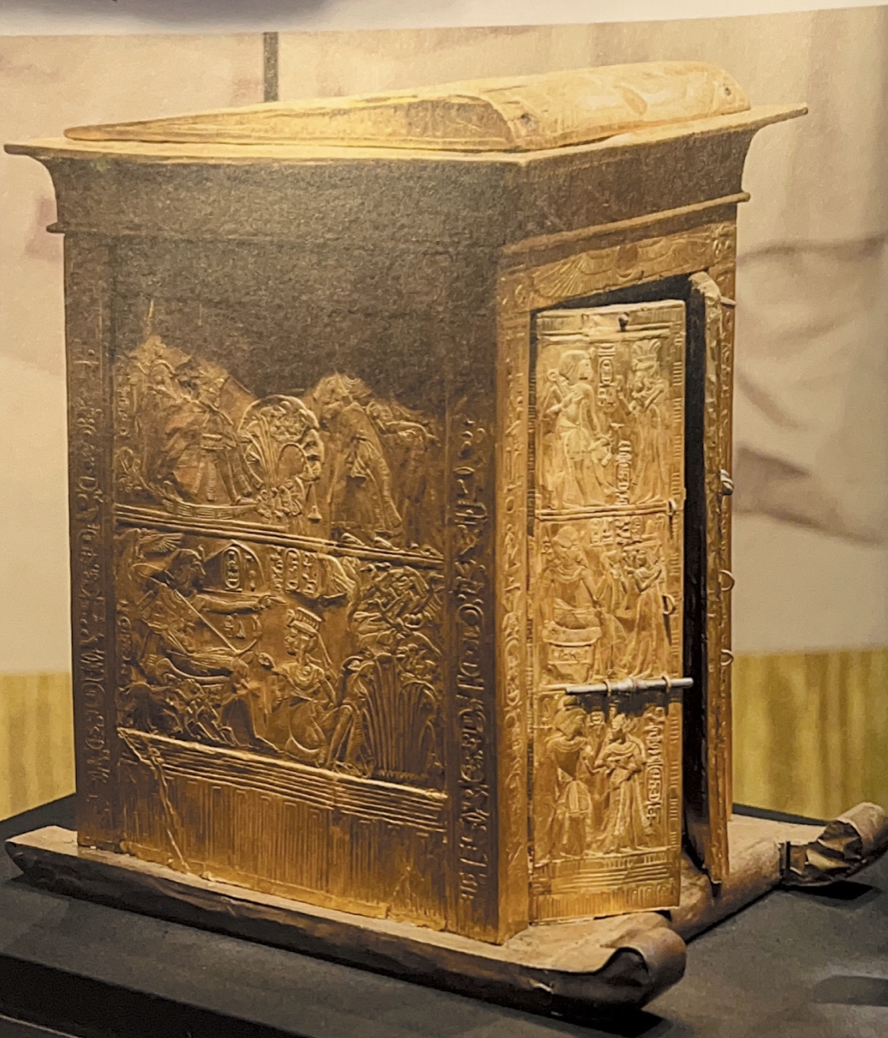
I will be including pictures of several Egyptian boxes/barques, most of them sacred. God, however, had only one box, but it was a really good one. Always, the comparison of boxes became a comparison of the Living God with the god of Egypt. The Hebrews, after witnessing the ten plagues and experiencing their own deliverance were still not quite irreversibly in the camp of the Living God. Another step would be needed. So that there would be no question about it, God would provide unmistakable evidence that He was the only God worthy to be worshipped.
The ten plagues had shown God to be superior to pharaoh. While they had brought about freedom for the Hebrews, they had primarily impacted the lives of the Egyptians. While the revelation they provided had been received by the Egyptians, the plagues didn’t quite register with the Hebrews. The plagues got them out of Egypt, but did not change them. Escape was the name of the game. To be changed, they needed an encounter with God working within their own lives, not in the lives of someone else.
As each of the following points is made, God is repeatedly showing how superior He is to pharaoh. As it becomes increasingly clear what a worldly choice the god of Egypt is, the inclination to worship pharaoh gradually falls away. Likewise, as it becomes imminently clear what a stellar choice the living God is, the inclination to worship Him gradually builds. The actual purpose for constructing the Ark was for God to reveal Himself as being far superior to the god of Egypt. Hang on tight. Here we go.
The dead god of Egypt lay inside the bark and it would be used to transport him to his tomb. Meanwhile the God of the Hebrews was not inside the Ark. Of course not; He wasn’t dead. The god of Egypt was dead, while the God of the Hebrews was alive. (1) God is alive!
Dynastic Egypt lasted for at least three thousand years. I am told that many nations have about a two hundred year life expectancy. Having been such a powerful nation for so much longer than normal shows that Egypt had been a truly remarkable place. For the Hebrews to understand the greatness of God, He had to elevate Himself well beyond the god of Egypt, a tall order.
Through much of their three thousand years they maintained a similar burial practice. There had been a long line of pharaohs, well over a hundred, and a new bark to transport pharaoh to his final resting place was built each time their god died. The Hebrews, however, only built one such box. They never needed another since there was no long chain of gods. (2) There is only one God.
While the two boxes were somewhat similar, they were trimmed out very differently. The way they were decorated would show how the natures of Pharaoh and the Living God were vastly different. The Ark would reveal the spiritual nature of these comparisons, It had wings of Cherubim (Angels) spirit beings on the lid. The bark usually had no angels.

However, look closely at the box on the left. It does have wings extending out from the corner. They are difficult to see here. God’s box had wings of seraphim and the comparison here is incredible. The bark was the place for a man who wanted to be known as a god. However, the Ark was the place for a God who was not a man. (3) God is a spirit. (John 4:24)
Boxes are not the only thing commonly portrayed in Egypt. Wings are also a common depiction on their walls Particularly in conjunction with the sun disc, they represented the soul, the “BA”. Egypt was very concerned with the afterlife and went to draconian measures to present their understanding of it. At death the soul would ostensibly ascend to a place within the Milky Way. The wings were often very large, (alluding to a really major trip). When depicted as a part of the goddess Isis, they are sometimes seen as assurance of safety.
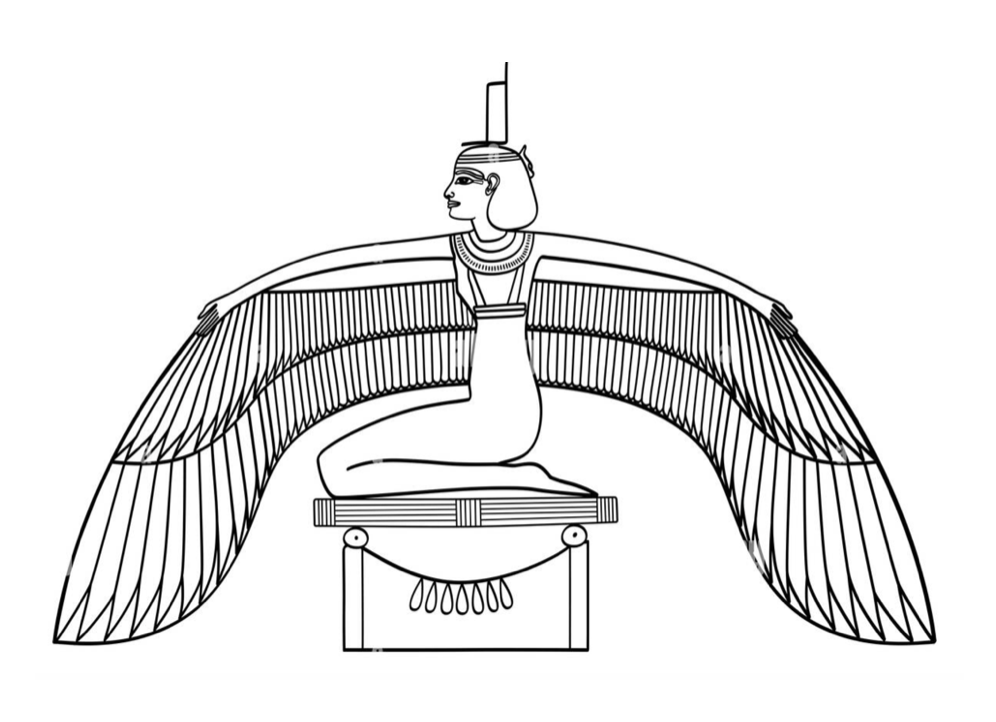
As God was revealing himself to the Hebrews, he spoke to them through the lens of their own culture, a culture which at that point was the culture of Egypt. After four hundred years in Egypt, the Hebrews understood the Egyptian culture better than they would have remembered their own past, the time of Abraham. God spoke to them through the lens of the Egyptian culture.
Wings on the Ark are often thought to be wings of Seraphim, angel wings. Maybe so; but, I wonder. When the wings were shown of the Egyptian god Isis they were mounted between the shoulder blades with the wing tips pointing out, what we would normally expect. In the case of Isis, wings often represented protection or safety. In both Egypt and the Bible, everything had a meaning.
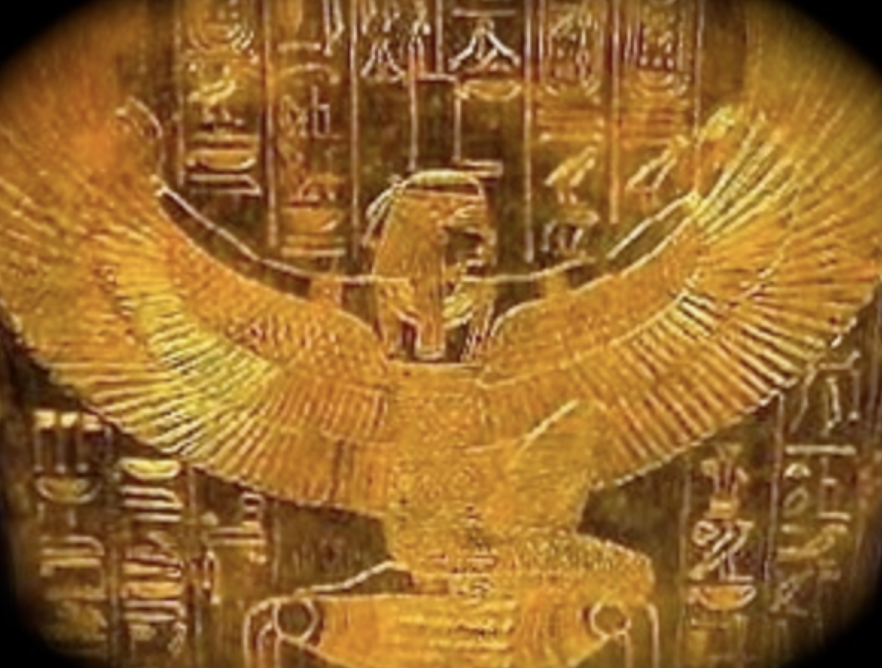
Wings on the Ark are positioned in a rather strange way. They are not mounted with their bases close together. They are attached to opposite sides of the Ark, as far apart as possible, with the wing tips pointed inward and nearly touching, a very difficult way to portray flight. The wingtips do not touch. The Ark could not fly with its’ wings mounted in such a strange way.
The Ark was about God, not about man and, for sure, not about Isis. The meaning would have to do with God and what He would do. God is never depicted having wings; neither does He fly. Since He is everywhere, He simply appears. His intent would have been to send a totally different message than that sent by the wings of Egypt.
Since the wing tips of the Ark nearly touch, perhaps they indicate a coming together, a coming together of God and man. Isn’t that what the Bible is all about? Isn’t that what the wings are doing? Since the wings were mounted in a way impossible way to permit flight, they cannot be pointing to the God leaving at all and absolutely not of flying away.
Everything God had been doing indicated that He would never leave His people. He would not only never leave, He would do the exact opposite. He would draw very close to His people. The wingtips are very close.
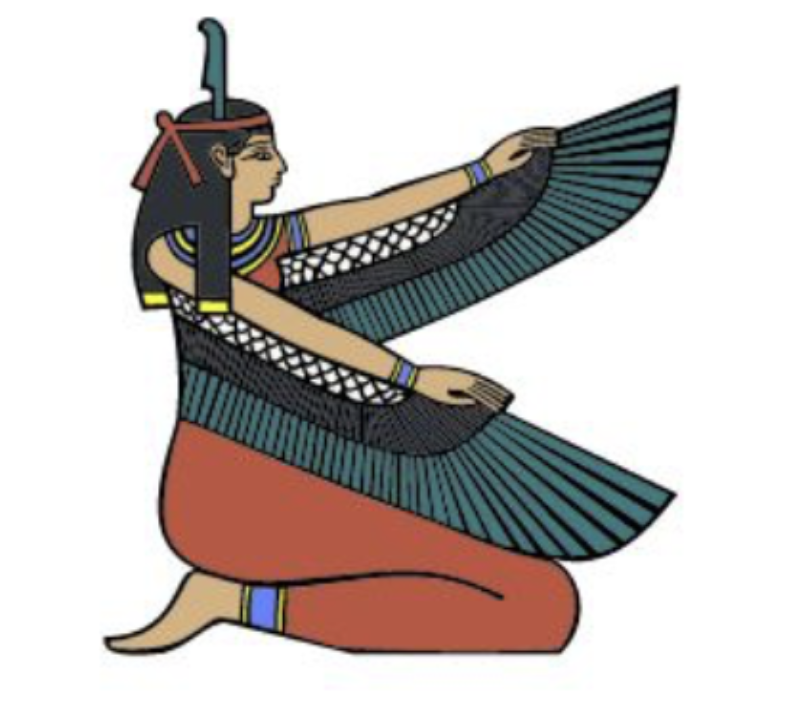
Alive or dead, on his throne or in the bark, the god of Egypt could easily be seen. On or in the Ark there was no visible presence of the Lord. Men are visible; God is invisible. (4) The living God is invisible. (Timothy 1:17)
The dead god of Egypt was transported inside the bark to his final resting place. The place for a dead god was inside a box. He was no longer on his throne; it was now empty. God, however, was not to be boxed in. He was on the lid, the throne of God, known as the mercy seat. (5) God is on His throne. (Psalm 47:8)
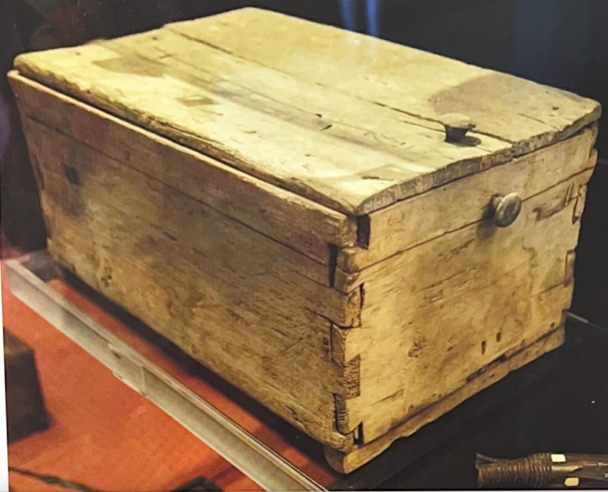
Once the god of Egypt was moved to his tomb, he would no longer be in mans presence. Meanwhile, the Ark would be in continuous use for generations and God would be present throughout. (6) God would always be in His peoples’ presence.
The god of Egypt was carried to his permanent tomb in the barque. The Ark would not be used to carry the living God to his tomb since he had none. (7) God would never die.
Pharaoh was being taken to where the people had decided to bury him. He no longer had a choice in the matter. That was not the case for the living God. The Ark was always at the front of the advancing column of Hebrews. He would not be taken along for the ride but rather would be leading the people to where they were going. (Joshua 6:6) (8) God is leading the way!

The Egyptian god Anubis is shown at the right on top of a box, a somewhat Ark like box! At least here he has a nice place to sit. Of the many comparisons God was making, the Hebrew leg of this point seems to be the only one that is ever noticed by people today. There are many more. Stay tuned.
Pharaoh would be very much involved in planning for his death. He would have much to say about how he was to be treated at his own death. God would not be concerned, at all, about His death. (9) He would teach others how they were to live.
Even though the god of Egypt was no longer present, the living God was making His presence known in several ways. Since He would be found on the mercy seat, for Him to be continuously present the Ark had to be carried by the marching Hebrews. (10) The desire to have God continuously in their midst was evidenced by the fact that they deliberately carried the Ark everywhere.
The dead pharaoh fit nicely inside the bark. However, the living God would not fit inside His box. He was far too large. Heaven was His home and earth his footstool (Isaiah 66:1, Acts 7:49). (11) He is a far bigger God than pharaoh.
Are you awake? This next point is possibly the most significant of all these comparisons. The dead king was physically transported to his tomb. Once inside his tomb, the king would then descend into the “duat”, the Egyptian underworld. There he would fight his way through a nightlong series of difficult battles. It was during those struggles that he would attempt to prove himself worthy of continuing as a god in the afterlife.
If he was able to overcome in each battle, he would be resurrected and ride to his new home in heaven (which was thought to be in the cosmos). This ride would take place in his barque and he would become a star. Pharaoh would then continue to be worshipped as one of many gods.
The prophetical nature of this event is normally overlooked. The chain of events that the deceased god of Egypt experienced is very similar to that through which Jesus would pass 1500 years later! I can think of no other event that would better portray Jesus as being alive, dying, descending into the underworld and doing battle there (preaching), being resurrected, and finally rejoining the Father (I Peter 3;19). (12) The experience of pharaoh is prophesying directly about the death, burial, and resurrection of the God, King Jesus!
Overcoming in the “duat” was not assured. The possibility of failure continually confronted pharaoh. That’s what always confronts man, even when he thinks he is a god. (13) The living God, however, would never fail. (Joshua 21:45)
Are you surprised how may comparisons there are here? Do you wonder why you have never spotted them? I had never noticed them. None of these came at the historical level. God has never given me facts. It has always been the meaning that He has shown me. Before I was able to hear from God, He had to have something to work with. I had to learn about the physical leg, which in this case, meant that I had to learn about Egypt, a non scriptural subject.
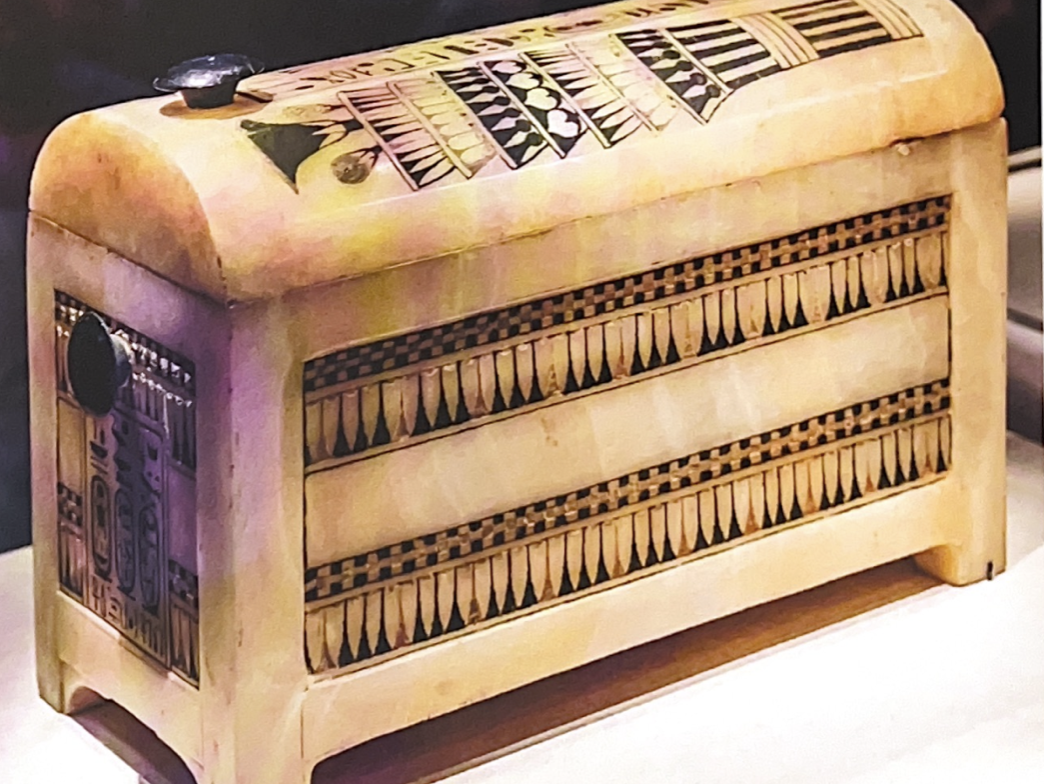
Learning about the bark/boxes was a part of my learning curve. I had to see how all of them were being used; that was my part. Once I had done my part, then God could show me what it all meant; that was His part. If you want God to speak to you, He is willing. However, you may have to do your part first. Learn the facts, then God can show you what it all means.
I’ll sneak in a little New Testament here. All comparisons with Jesus must be regarded as prophetical and, because of the 1500 year time gap, we don’t really know if the Hebrews were discerning enough to spot them all. Whether or not the Hebrews had seen them, at least we can and they are remarkable.
The god of Egypt had to prove he was worthy of resurrection. Pharaoh would continue to be worshipped only if he was able to overcome the many obstacles he would encounter in the “duat”. The god of Egypt had to go there and had to overcome in the underworld. This was unnecessary for the living Son of God. He came and went as He wished. (14) At the cross, Jesus had overcome the world. (John 16:33)
Pharaoh had no choice in the matter. He was doing battle under his own power hoping that his power was great enough to obtain his place in the cosmos; the outcome was uncertain. Jesus didn’t have to prove or obtain anything; the Father had already given Him all power. There was no doubt about it, (15) Jesus is all powerful. (Hebrews 1:1-4)
In death, the god of Egypt had lost his fight for survival. However, Jesus engaged in no such fight. (16) Jesus had given his life voluntarily. (John 10:18)

Pharaoh would become an unidentified star. Jesus is known specifically as the “bright and morning star” (Revelation 22:16). We usually associate that with Venus, the brightest star in the heavens. (17) Jesus’ star shines more brightly than that of pharaoh.
Pharaoh’s star would be seen only at night. In our culture, today, nighttime is normally thought of as the end of the day (the opposite of the biblical approach). His star was pointing to the end. Jesus’ star is seen in the early morning. Significantly, (18) Jesus’ star is pointing to a new day, a new beginning!
Both God and pharaoh would ride along with their boxes until they reached their respective places of rest. However, for God the meaning of rest was quite different than it had been for pharaoh. For pharaoh, rest would mean that he no longer had anything to do. No work was to be done. His rest would take place in his tomb; it was of a physical nature. He had died. He would ride along in the bark only until he reached his place of rest.
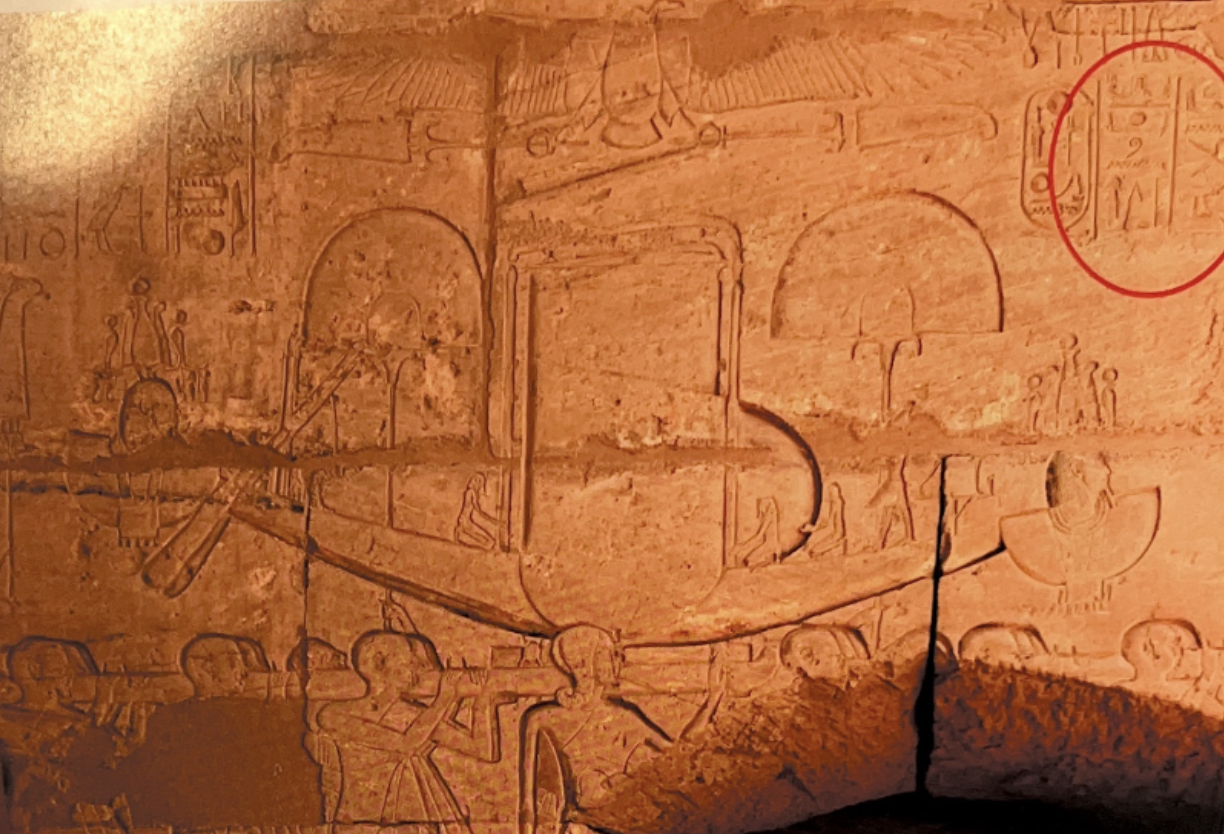
God would also ride along on His ark until He had reached His place of rest. However, in his case, rest would mean that He had taken up his position in His temple (or tabernacle). Since He had not died, the meaning was quite different. Rest did not mean that He could kick back and have nothing further to do. It would mean that He had arrived at the place from which He would launch His ongoing plan. One aspect of His creation was complete; but, He was far from finished.
For Him rest would begin when He arrived at a permanent place in His temple (which would be constructed nearly five hundred years later). He had not died, but He had taken up His place in his temple. Initially, that meant the ark was placed in the tent but was later housed in the temple. It represented the presence of God. However, that did not last for too long. Once inside His temple, (His place of rest) the ark was no longer carried into battle. It is shortly after that point (during the reign of King Manasseh) that the ark is no longer mentioned in the biblical record. That generation had moved away from God.
For God, rest was of an entirely different sort than it would be for a pharaoh. He now had a place from which He could carry out His ongoing work. It was as if He had reached a place of beginning. 19) God had taken His place in the temple, His place of rest.
While pharaoh was still alive, he would have taken his position within the Egyptian war tent (which is best known as used 200 years later by Ramses II). It was the place from which the then living god of Egypt would have planned and directed the conquest of his enemies. His was to be a physical conquest.
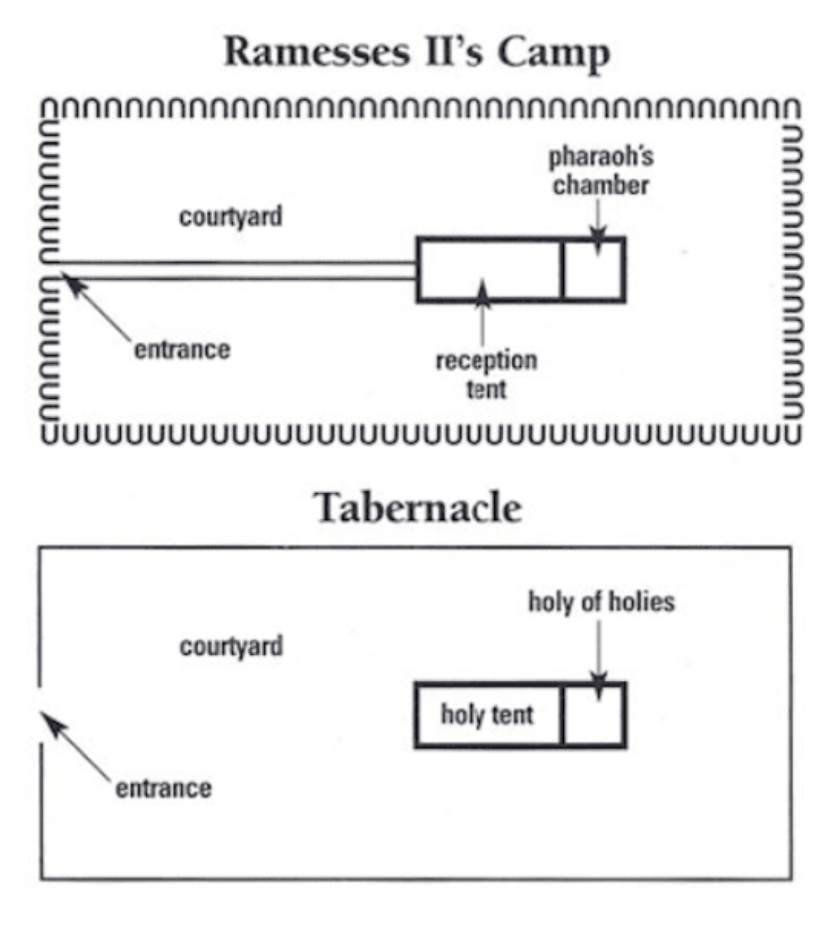
Hold on to your seat! The tabernacle was an exact copy of the Egyptian war tent. However, it was not used to plan or direct a physical assault on His enemies. God would use it to show His people how the spiritual conquest of those He planned to add to His covenant was to take place.
Representing the continuous presence (and ongoing conquest) by the living God, He would take His position in the Holy of Holies within the tabernacle, the same location that had been occupied by pharaoh.
From the time the tabernacle was constructed, the Hebrews were no longer fleeing Egypt. They were now on the offense. The (spiritual) conquest had begun. (20) God would now use the picture of an Egyptian military conquest to show how He would bring about the spiritual conquest of the Canaanites (the world).
So…. both God and pharaoh had taken up their position within their tents. But where was the tent?
Pharaoh had positioned himself at the rearmost possible place, well removed from the actual fight. He was directing the battle from, a place of relative safety and was not exactly in the battle, at all.
God, however, has placed His tent squarely in the middle of the tribes of Israel, three tribes on each side of His tent. He is always to be found centrally located in the very midst of His people. At that point, He is preparing His troops for battle. God would be very involved in the conquest. He would not direct the battle from a place of safety. He would not be an observer. He would be squarely in the midst of the fight. (Ephesians 6:12). (21) God will be involved directing the (spiritual) battle to win the world.
Pharaoh was required to do battle in the underworld to obtain his own resurrection. Apart from his own effort, he would remain in the grave forever. He had to save himself.
Jesus was not there to escape the grave. He had gone there deliberately. …in which he went and proclaimed to the spirits in prison, because they formerly did not obey (I Peter 3:19). (22) Jesus had gone there to preach to the lost.
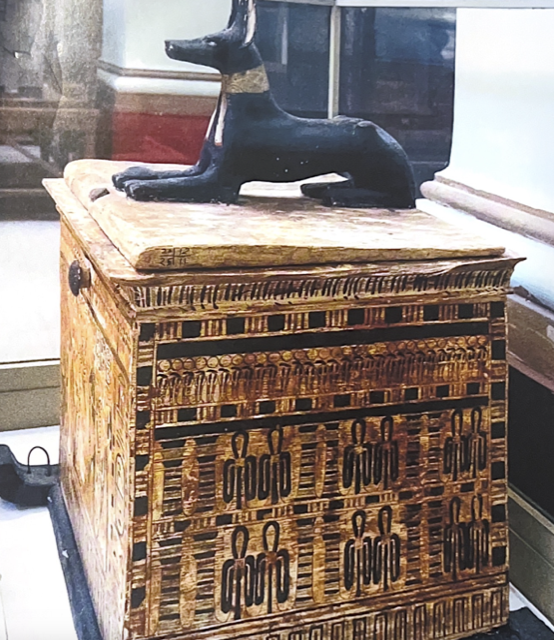
In the box at the left pharaoh (depicted as the Egyptian god Anubis) is actually on top of a box similar to the Ark. This is the second time we have seen this relationship. The Egyptian god is being carried to his destination,
Jesus had said my yoke is easy and my burden is light (Matthew 11:30). Little by little that is being demonstrated in these comparisons by revealing all that God was about and would willingly do for His people. In none of these comparisons does He ask anything at all of His People. He is only revealing Himself. If you ever think that what God asks of you is too much, remember this. He required far more of Himself than He would expect of His people.
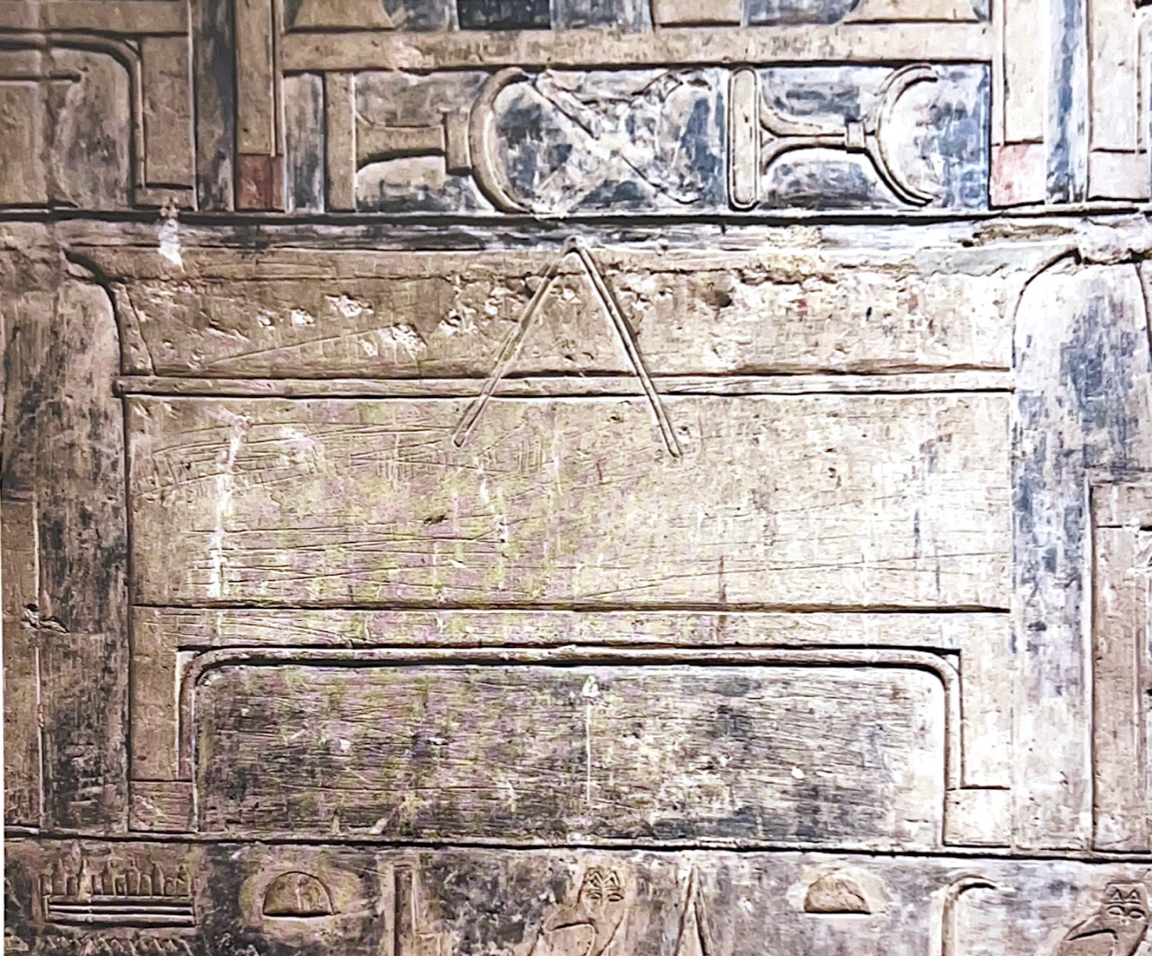
Back to the old Testament. Since there were hundreds of gods and thousands of stars, the Egyptians would never know exactly which stars were their gods. Since not every star had been a pharaoh, some doubt would exist as to which ones were to be worshipped. The Hebrews would have no doubt about what was to be worshipped. The living God kept it simple; (23) They were to worship only Him. (Luke 4:8)
When pharaoh died, he could no longer do anything at all for his people. His time to rule was over; for him it was the end. However, (24) God’s time to rule is without end. (Luke 1:33)
Pharaoh wasn’t primarily focused on what he could do for his people, anyway. For the most part, he would do whatever was best for himself. God, however, was primarily focused on what He could do for His people. (25) What God would do for His people was freely given! (1 Corinthians 2:12)
When pharaoh would die, he would go through a rather lengthy embalming process lasting forty days. One aspect of this process was that his brain would be extracted from his skull. It would actually be removed by suction through his nasal passage and placed in a small vile that would be buried with him in his coffin. That was done to prevent decomposition. He was embalmed to preserve his own body. God, however, would not attempt to preserve the body, He would preserve the spirit. (John 10: 27, 28) (26) God would provide eternal life for man.
Once pharaoh’s brain had been extracted, pharaoh, quite literally, “didn’t have a brain in his head”. He would know absolutely nothing. The living God, on the other hand, was fully aware of everything, everywhere, and at all times. (1 John 3:20) (27) The living God is all knowing.
Pharaoh would be in his tomb with his eyes closed in death. He was completely wrapped in cloth with his eyes covered and put in his sarcophagus. Its’ lid was then put in place and there was no light in his tomb. He was in an absolutely dark place and unable to see anything. Meanwhile, the living God did not need light to see. (1 John 1:5) (28) God was the light.
Pharaoh was unable to see in the dark. The contrast is that God could see under any conditions. The eyes of the Lord are everywhere, keeping watch on the wicked and the good (Proverbs 15:3). (29) The living God is all seeing.
Those who carried the bark did not touch it. It was sacred; but, the deceased pharaoh was now powerless. He was dead. Those who carried the Ark dared not touch it. It might electrocute them (II Samuel 6:6-8). It still had its power. (30) God continues to be all powerful.
Pharaoh’s tomb was also very quiet. It was deeply buried underground. No person would ever again enter it and some tombs have only been rediscovered after 3,500 years. He was no longer in the presence of any sound, whatsoever. Pharaoh would not hear anything. While this goes on, God has not insulated Himself from sound. Psalm 34:17) (31) God hears the cries of His People.

The Egyptian embalming process was lengthy and you may find it unpleasant. The brain was not the only thing removed. The same was done with the internal organs. They were removed, packaged separately, and also entombed with pharaoh’s body. Left in place, they would have caused the entire body to decompose. The things that would cause a body to decompose were removed before causing trouble.
God would use a different approach; He was not concerned with what might come out of the body. God said: (32) What comes out of a person (his mouth) is what defiles him. (Mark 7:18-23)
There is one more part of the embalming process to take note of. The blood would also be drained from pharaoh’s body. However, it was only removed when he no longer needed it to live. He was already dead. If it remained in his body it would also hasten the decomposition of his entire body. Blood present in his body would actually be taken only when it was about to become a problem. It was being taken to preserve pharaohs’ own body.
Looking ahead to Jesus, once again, He was giving his blood at a time when it would cost him his own life. Pharaoh’s blood was taken to save his own body. (Matthew 26:27,28) (33) Jesus would give His blood to save others.
The embalming process has successfully demonstrated that the body could be preserved for thousands of years. To what avail? It was still dead. Embalming could never bring back life. God, on the other hand, would not preserve the body, He would preserve the soul. (John 3:36)(34) Salvation would allow men to live forever, spiritually.
A great deal of effort and the resources of the entire Egyptian economy was expended on pharaoh and how he would spend eternity, a tremendously lopsided picture. How was everyone else going to spend eternity? The living God would have concern for all of His people. He would not put pharaoh ahead of others. (35) The Living God is not a respecter of persons (Acts 10:34,35).
The change that would take place in pharaoh would be brought about by those who remained alive after his death. Living men would change pharaoh after his death. For God’s people it was quite different. It would not be men that caused a person to change. God would be continuously working to bring change to living people. It would not be men who would change god, (36) It would be God who would change man.
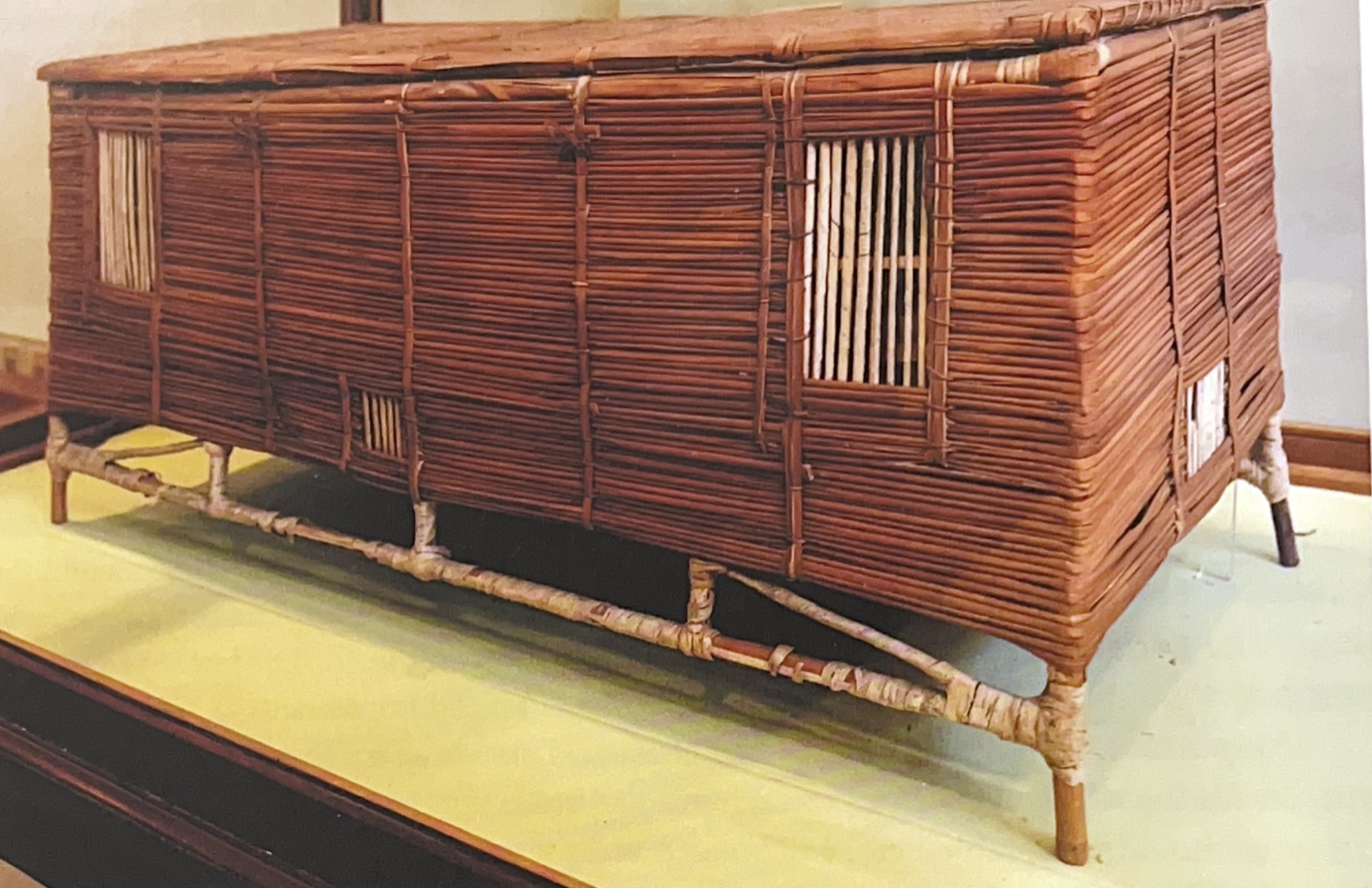
The embalming process worked on the inside after death for the purpose of preventing further physical change (deterioration). God would also work on the inside but would do it while man was alive. However, He would actively be working to bring about an internal change. (37) God would change a man on the inside.
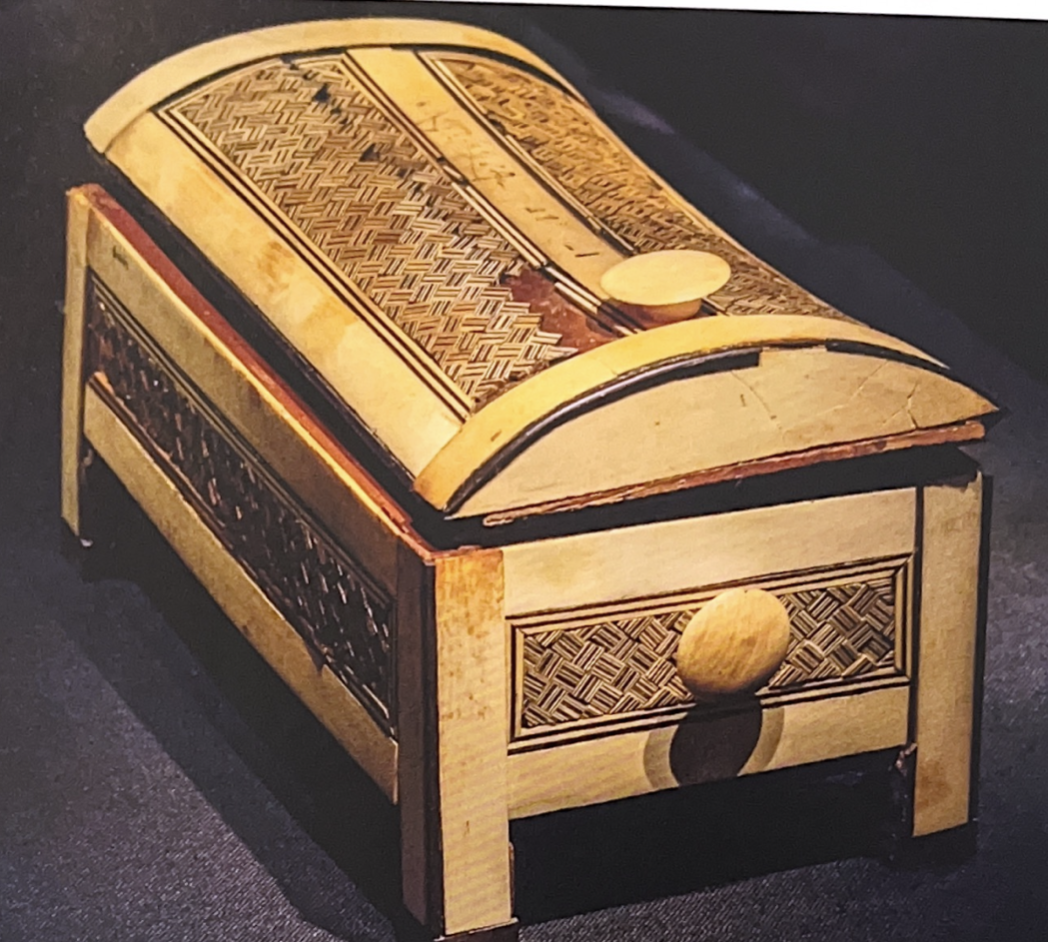
Both Egypt and the living God had great concern over what would happen at death. The change that pharaoh would undergo took place after he died. If he prevailed in the underworld he would be resurrected. The other side of the coin was quite different. Whatever change that might come about in a man, whatever he was to become, would need to take place while he was alive, not afterwards. (38) From God’s perspective, what would become of man after death would be determined during his lifetime.
Did you think there would be so many of these comparisons? As these continues to mount, their significance becomes obvious. God has shown them to me one at a time (over a six month period) and by themselves each of them might seem small. God has never shown me anything major all at once. Each thing He has shown me has always appeared to have been small. However, taken together, they become overwhelming. What might seem to be a very small revelation can grow into something truly astounding.
If you are hoping that God will reveal something very special to you, He will. But, it may come in small bites. If something small seems to be coming to light, keep your spiritual antenna up. More might be coming.
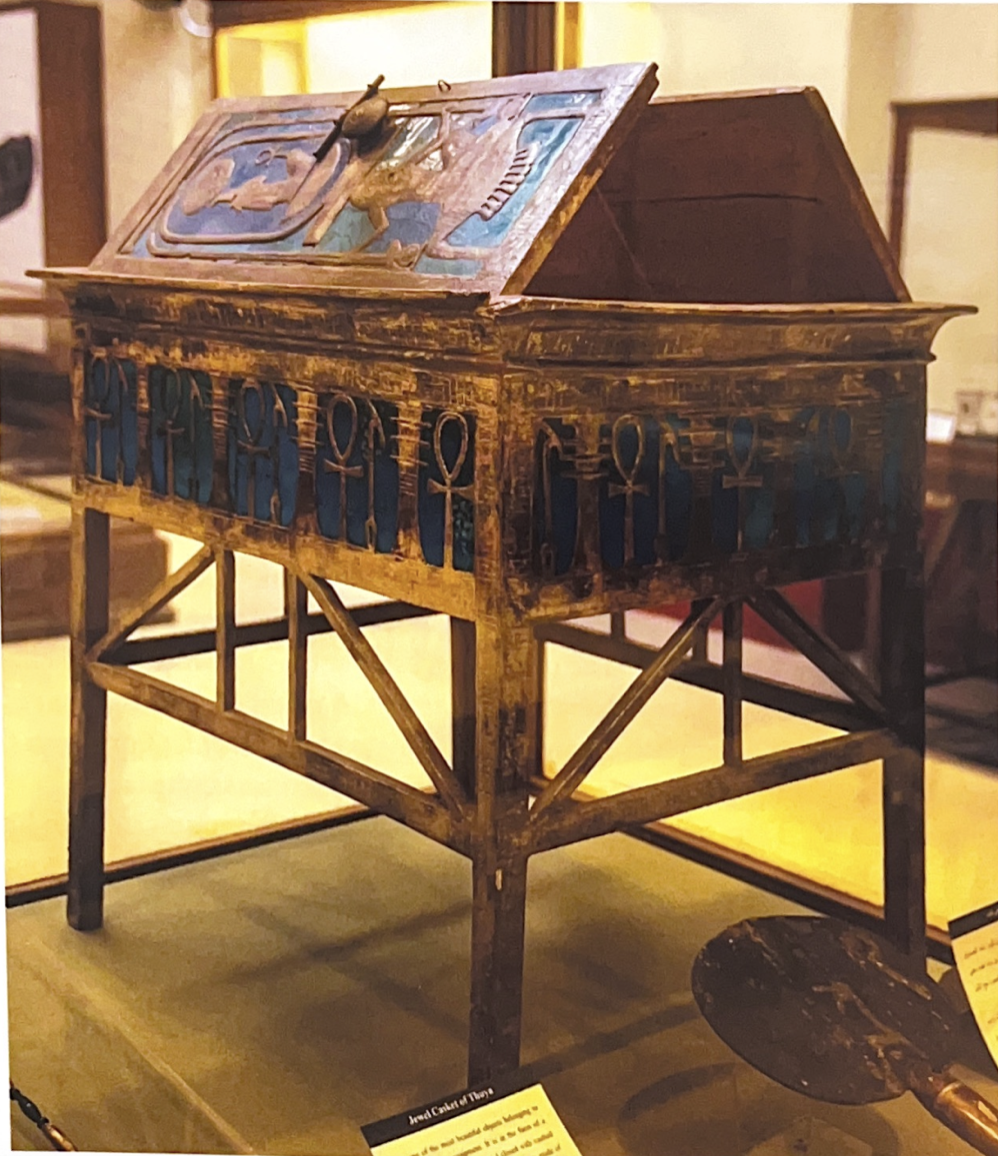
When a pharaoh would die, his body would stiffen up. His jaw would become locked up and would not move. To counter this, as part of the embalming process, Egypt would hold an “opening of the mouth” ceremony, a critical part of burial. This ceremony was normally carried out by the son of pharaoh (the man who was about to become a god, himself).
Have you ever heard the expression the “mummy gape”? Sometimes the mouth of a mummy is wide open. Never-the-less, with his mouth open or closed, the dead pharaoh was still unable to speak. God, however, does not suffer from lockjaw. (39) God continuously communicates with His people.
Since the Egyptians would not even know which star their god had become, they would not know exactly where he might be located. He was up there somewhere; but, if pharaoh was successful in his bid to become a star, he would be very far away. In today’s understanding, that could amount to millions of light years. Distance would not be a problem for the living God. The Hebrews would know exactly where their God was to be found. He would be found on the box. As the songwriter says: (40) “He’s as close as the mention of His name”.

If the god of Egypt had been successful in his nightlong battles, he would then become a star and be forever visible but unreachable forever. (41) The Living God would remain forever invisible, but reachable forever.
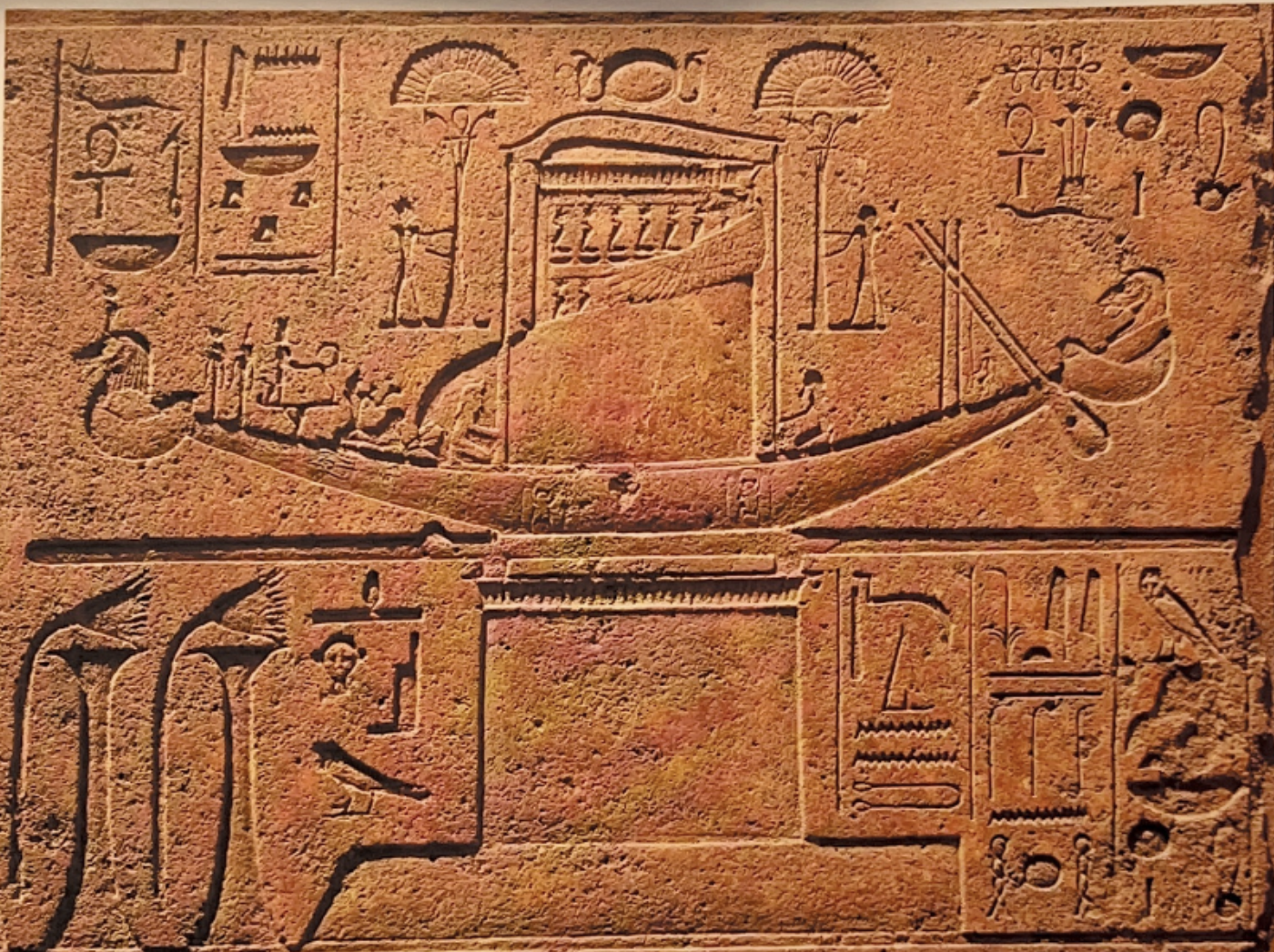
The deceased pharaoh would ride to his new home in heaven in a boat. A few of them have been unearthed by Egyptologists. The “skyboats” which had been located around the great pyramid have been relocated to the new mega museum in Cairo. Since this writing is primarily about the living God rather than pharaoh, I haven’t attempted to make a numbered point of this. But, you might wonder, if the boat remains on the ground what the implication of that might be.
Listen up! This may be the second most important comparison. The Hebrews had constructed the Ark at the command of the Lord, but were never instructed to build a boat so that God might return to heaven. Scripture makes no mention of a boat. No boat was included in the design of the Ark and no Hebrew skyboat has been found archeologically. This is the most striking difference between the Egyptian and Hebrew stories. Sometimes what is not said becomes important. The entire effort of the burial of pharaoh centered on him leaving. The Living God was making no statement about leaving. However, He did say this: “Behold, I am with you always, even to the end of the age”(Matthew 20:28). Completely unlike Pharaoh, (42) This God was planning to stay.
While we don’t know how many of these comparisons the Hebrews noticed, they almost certainly had spotted many of them. While they were still camped at Mt Sinai, they moved quickly from worship of the god of Egypt to the one living God and it took place almost immediately after building the golden calf, for them a very low point.
These comparisons had shown what the character of God was like and and how much better He was than the god of Egypt. The Hebrews now had a reason to want to make the change. He was, indeed, worthy of worship. They could trust their God.
God had revealed Himself to His people using many different boxes with which the Hebrews had been very familiar. However, it was not about the similarity of boxes. It was about the vast difference between gods. While the Hebrews would encounter nearly continuous problems in the future, they never again returned to the worship of the gods of Egypt. While new problems would center on Baal, the god of the Canaanites, the spiritual Exodus was complete. The gods of Egypt had finally been left behind.
Baal would become a problem generations later. In spite of all that God had done to reveal Himself to the generation of the Exodus, a short time later, God had to begin all over again. The next generation would have to make its own choice. History, while important, was not necessarily enough. What our parents had learned does not automatically transfer to us. God deals with us, individually. Every generation must experience its own encounter with God.
God was portraying Egypt where they had been spiritually at the moment of the Exodus. Repeatedly, those very close to God never seem to be able to remain close to Him for long. The greatness of Egypt and the way it had been lived out seems to indicate that they had once been much closer to Him. Blessings from God abound throughout Egypt.
The existence, alone, of the huge number of gods they worshipped by the moment of the Exodus is showing how far from the living God they had moved. Emphasis on the physical had taken over. They were exalting pharaoh rather than the Living God who had been active in their culture previously.
We have now come to our final comparison. Did you ever imagine there could have been so many. My fingers have been worn to a frazzle from typing so many comparisons. While alive, pharaoh was worshipped as a god. In his court every knee would bow (to him). That was required. The Hebrew side of this was very different, when Moses returned from Mt Sinai and discovered the Hebrews had reverted to the worship of the gods of Egypt, he said: ”Who is on the Lord’s side?” (Exodus 32:26) (43) Worship of this God (at least at that point) was by choice.
God is infinitely better than the god of Egypt and through these comparisons the Hebrews were able to see the difference and choose between them. They chose God. How could they not? Today, we have an opportunity to make the same choice as the Hebrews. Now we have seen the difference. God is far better. If you have never had a reason to choose God, now you do. The choice is now yours. Who do you choose to worship, the god of the world, or the living God?
Credit: Pictures of Egyptian Boxes taken from “The Ark of the Covenant in its Egyptian Context” by David A. Falk.